TECH2X consortium meets in Barcelona to advance deep-tech innovation in higher education
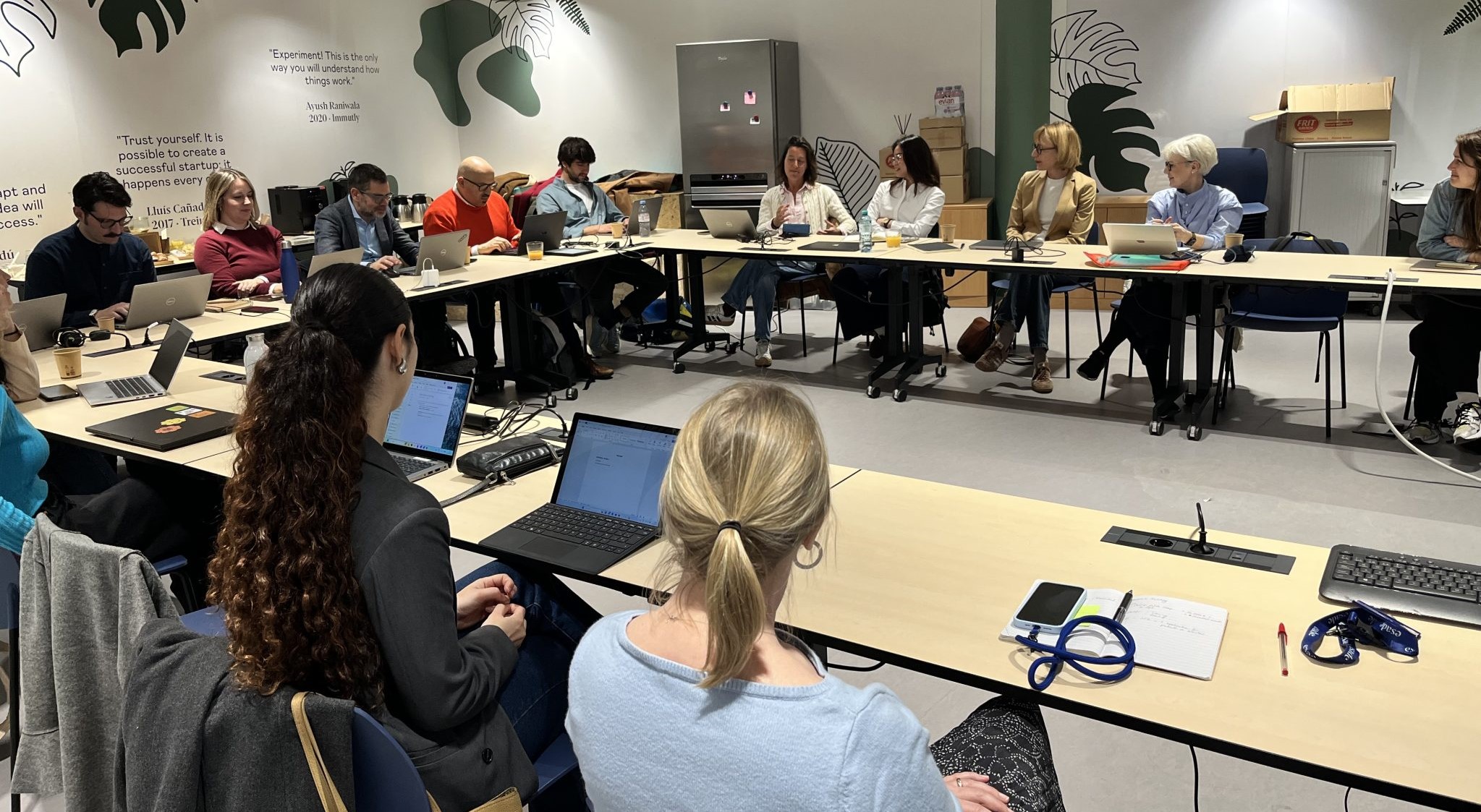
On 13–14 March 2026, partners of the TECH2X project gathered in Barcelona for a two-day in-person consortium meeting hosted at Esade. The meeting brought together representatives from across the consortium to review progress, share insights, and define the next steps in strengthening deep-tech innovation and entrepreneurship within higher education institutions.
Advancing Innovation in Education
A central focus of the meeting was the continued development of tech-driven innovation courses across partner institutions. Updates were shared on flagship programmes, TechForward (University of Bologna) and TeSI (Esade), highlighting improvements introduced following Phase 1 implementation; and TH Mannheim and METU teams presented their new tech-driven innovation pilot courses.
Key enhancements include refined learning objectives aligned with design principles, clearer guidance for students, improved onboarding processes for researchers, and stronger connections to entrepreneurial pathways beyond the classroom. These changes aim to increase both the impact and scalability of the programmes.
Strengthening Researcher Engagement
Consortium discussions reinforced the importance of active researcher participation in innovation and entrepreneurship education. Insights gathered from structured interviews revealed that while collaboration with students is highly valued, challenges remain in communication, time commitment, and aligning expectations.
To address these issues, partners are developing practical tools and frameworks, including structured engagement models and a set of “flashcards” designed to support more effective collaboration between researchers and student teams.
Insights from the Venture Builder Pilot
The meeting also reviewed the results of the TECH2X deep-tech venture builder pilot, a 12-week programme designed to support student projects in progressing towards validated business concepts and potential spin-offs.
Key findings highlighted several challenges, including limited researcher availability, fragmented student teams, and the early-stage maturity of some technologies. The pilot also showed that deep-tech ventures require longer validation periods and more structured progression pathways.
Based on these insights, partners agreed on a set of improvements for future editions, including clearer entry criteria, stronger team commitment requirements, extended programme timelines, and a greater emphasis on hands-on, interactive learning formats.
Building an Interconnected Ecosystem
Another important topic was the development of an “Interconnected Ecosystem Platform” to support collaboration across institutions. Potential directions include developing a repository of projects and publicly available expertise, supported by institutional gatekeepers, as well as exploring AI-driven solutions to facilitate knowledge access and matchmaking.
Measuring Impact and Sharing Best Practices
The consortium also reviewed progress on quality assurance and impact measurement activities. Data from surveys and course evaluations will inform upcoming deliverables focused on best practices in innovation education and guidelines for preparing students and researchers for venture creation.
Plans are underway to disseminate these insights through workshops, practical toolkits, and international events, contributing to broader knowledge sharing across the higher education and innovation ecosystems.
Looking Ahead
As the TECH2X project moves forward, the consortium remains committed to refining its approaches and scaling its impact, helping to equip the next generation of innovators with the skills, mindset, and support needed to bring deep-tech solutions to market. Watch this space for upcoming events and resources from the project!